(From the archives – November 2013)
November 11 – it is a day to remember, for reasons as many as those remembering them.
For some, it is a time to remember relatives who served in the war or being grateful for the sacrifice of other soldiers. There are those who look forward to meeting veterans in school assemblies, reciting poems and performing music concerts. Others anticipate official 21-gun salutes and placing wreaths in public squares. A certain group are even debating the meaning behind poppies, a symbol long representing fallen soldiers, veterans and our annual Remembrance Day.
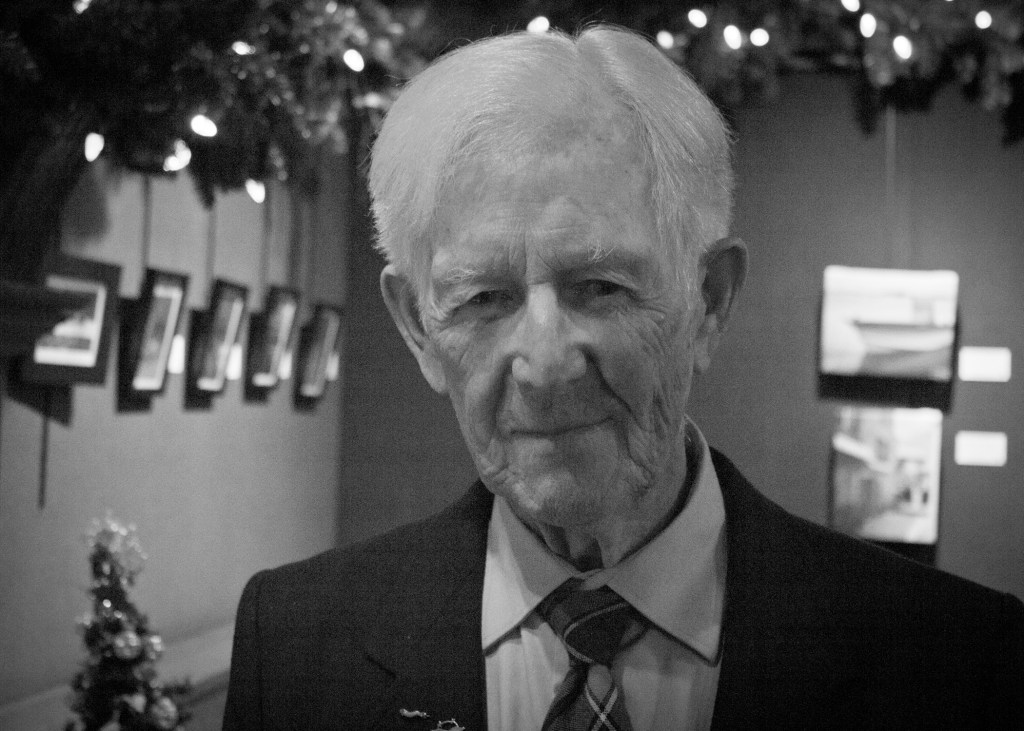
In the case of Veteran Albert Wallace, 93, who served in the No. 419 Squadron of the Royal Canadian Air Force, that means remembering being shot down from the sky with his fellow soldiers.
“When we were hit, our plane lost two engines,” he said. “There was a hole in the port wing and it caught fire… I was quite scared, I can assure you.”
The pilot ordered the other six crew members to ‘bail out’ from their Halifax Bomber, meaning they had to make a parachute jump from the plane.
Wallace recalled the experience with tears in his eyes.
“I was having a little nightmare,” he said; an apt statement, considering the plane flew only at night. Wallace opened the hatch and sat down with his feet dangling out, but he ‘couldn’t get the nerve to jump.’
“I thought I would hit the ground if I jumped out,” he said. “It was pitch dark. You couldn’t even see your hand in front of your face.”
As the pilot yelled for him to get out, Wallace gave himself ‘a little wiggle’ and let himself be ‘sucked out of the aircraft.’
“I had my hand… on the D-bar of the parachute. I didn’t wait for the normally three or five seconds. I pulled it instantly,” he said. “As soon as I hit the air.”
He dropped toward German soil from a height of 12,000 feet, at about 15 miles an hour. “I thought I was stranded up there,” Wallace said.
Two farmers spotted him landing within 25 feet of their barn, called the army and brought him back to their farmhouse. The war was over for Wallace. He was captured.
Several days later, after being interrogated in jail, he was transported to the Stalag Luft III, a prisoner-of-war camp located in Poland.
“I was there in that camp for 18 months,” Wallace said. “The camp where the Great Escape took place,” the event where 80 Commonwealth airmen dug their way out of the POW camp through a 336-foot-long tunnel.
Wallace, among other veterans, shared his story with Ted Barris, an acclaimed author and journalist, who recounts the stories of those involved in the Great Escape in his new book of the same title.
While people debate whether or not poppies should be worn, red or white, over what they symbolize or signify, Wallace remembers those who died while trying to escape.
“It’s the significance that you have. You’re remembering someone,” he said, “because so many died.”
Groups of people claim red poppies glorify war, while those white symbolize peace. He wonders why anyone would wear a white poppy.
“That’s just a group that’s trying to capitalize on things,” he said. “Poppies are poppies. They grow in the ground and they’re red. They’re not white.”
 The Point of Meaning